Flat Lay Apparel Photography in Shanghai — US$26 per Garment
Garments and accessories photographed laid flat — flat on pure white for a marketplace main image, filled and propped so the piece holds a three-dimensional shape, or styled with props for a detail page and A+ content. Forty to fifty pieces a day, 7 to 8 finished images per piece. Your first garment is shot and retouched free of charge, and sample shipping anywhere in China is on us.
We are a commercial studio in Shanghai, shooting here since 2002 and quoting overseas buyers in US dollars since 2016. Flat lay is our highest-throughput apparel service: there is no mannequin to dress and no collar composite to retouch, so a full style range can clear the studio in two or three days. Flat lay costs US$26 per garment, or US$21 per garment from fifty pieces up — the full price list is published.
On this page
Three kinds of flat lay, and they are not interchangeable
Most studios quote “flat lay” as one thing. It is three, and picking the wrong one costs a listing.
| Flat on white | Filled | Styled | |
|---|---|---|---|
| Looks like | Garment lying flat on RGB 255,255,255, no shadow, no props | Lying flat but filled and propped underneath, so it holds a shape | Warm or textured ground, soft cast shadow, props in frame |
| Use it for | Accessories, knitwear, socks, underwear | Outerwear, jackets, tees — anything with a shape to show | Detail page, A+ content, lookbook, social |
| Amazon main image? | Yes | Yes | No — a cast shadow or a non-white ground can get it suppressed |
| Price | US$26 per garment | US$26 per garment — the filling and propping is included | US$26 per garment, props included |
The middle column is the one worth knowing about. A filled flat lay gets you most of the three-dimensional look of ghost mannequin at the flat lay price, because the shape is built physically under the garment instead of composited afterwards. It will not show you how a collar sits or what the inside of a neckline looks like — for that you need the real thing — but on a two-hundred-piece range with a fixed budget it is very often the right call.
We shoot all three at the same per-garment price. If you tell us the marketplace, we will tell you which one your listing needs — and if you need two treatments of the same piece, the second styling of a garment already on the table is charged at 70%.
One garment, eight images
This is a stone-grey hooded ripstop windbreaker, filled and shot from overhead. It is one garment, so it is one charge, and this is what came back — the front, the back, the hood, the hem and the hardware.
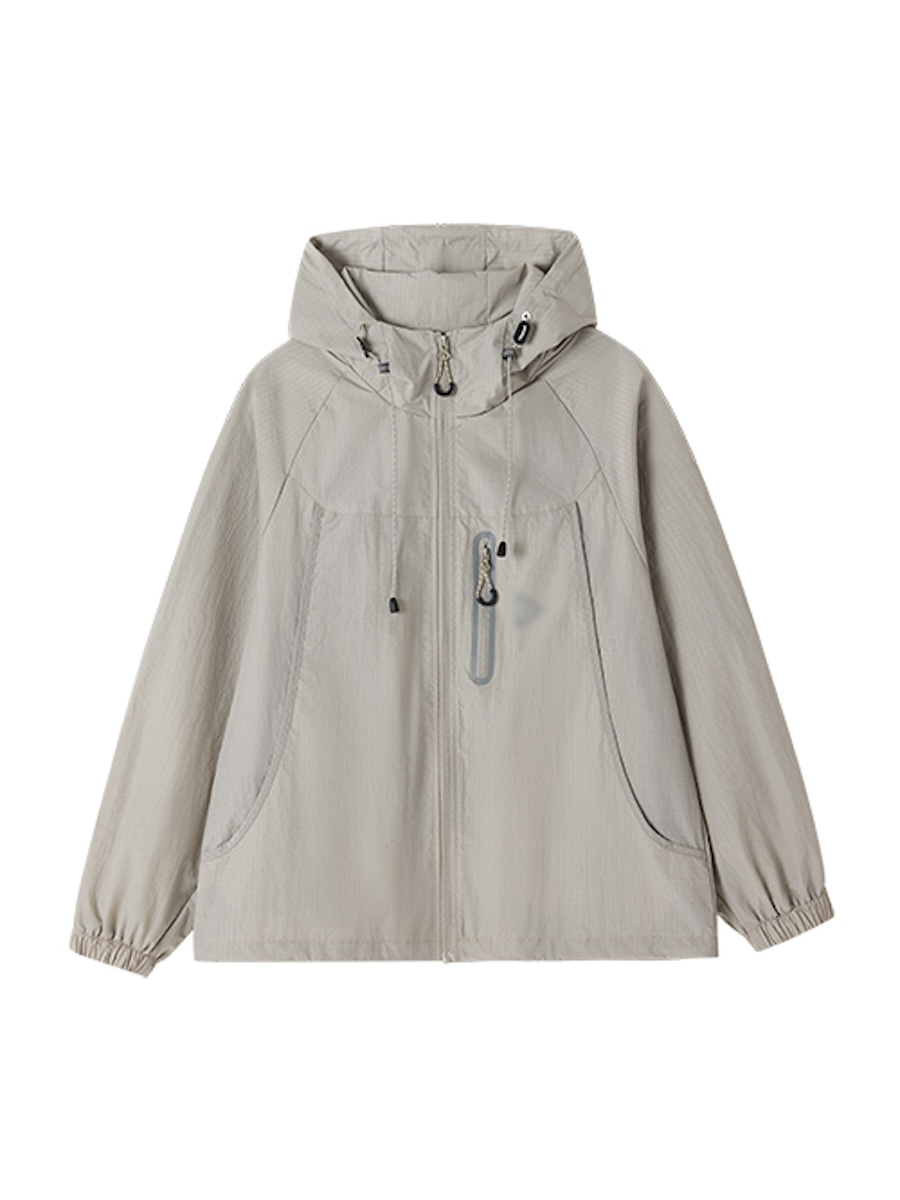
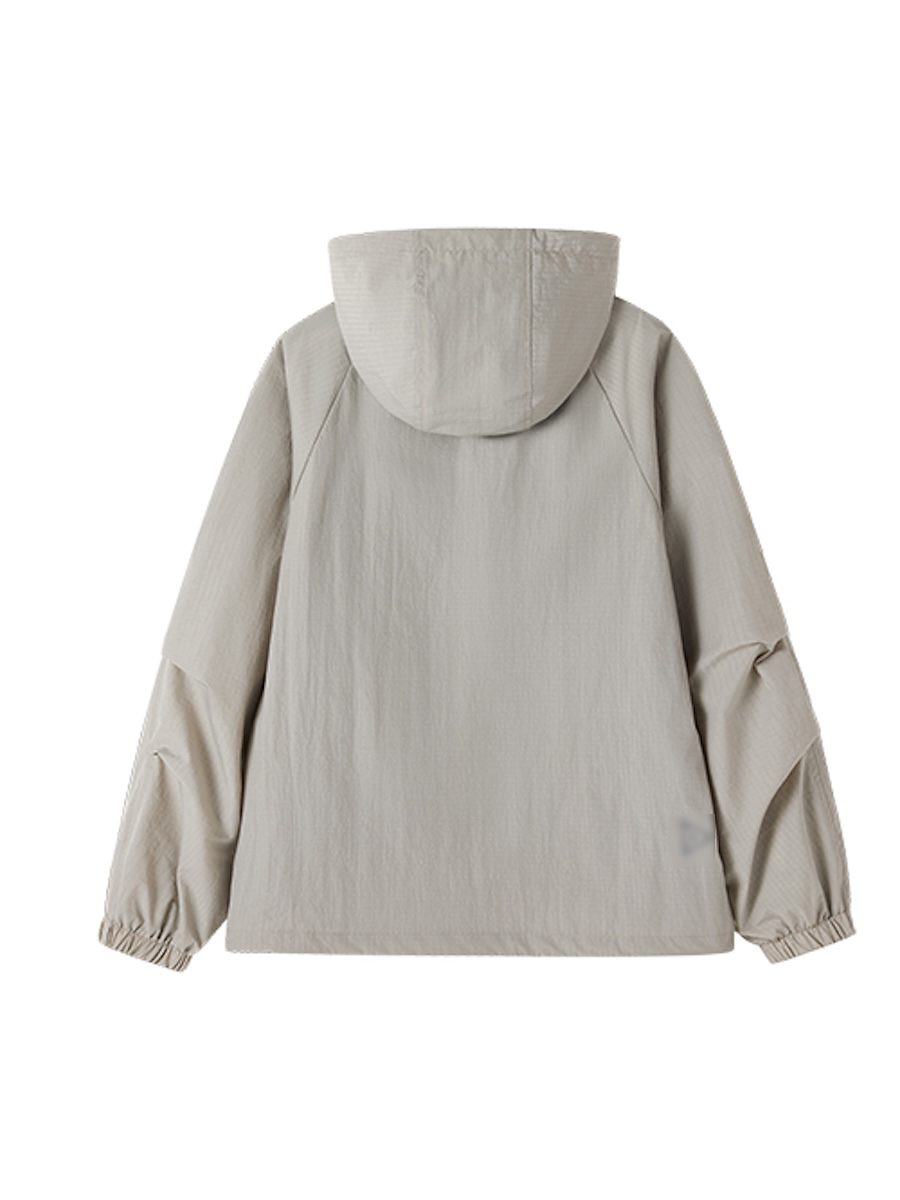
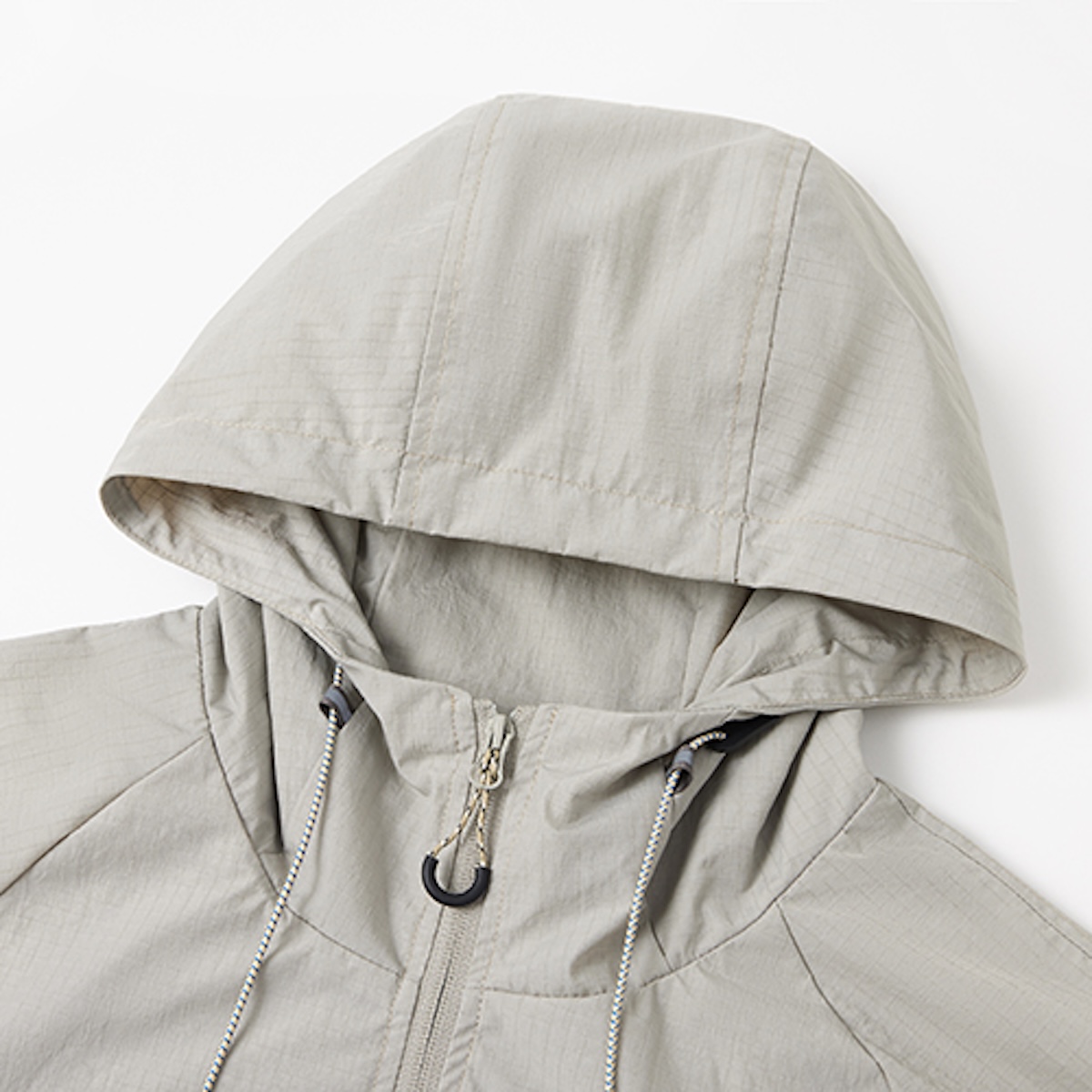
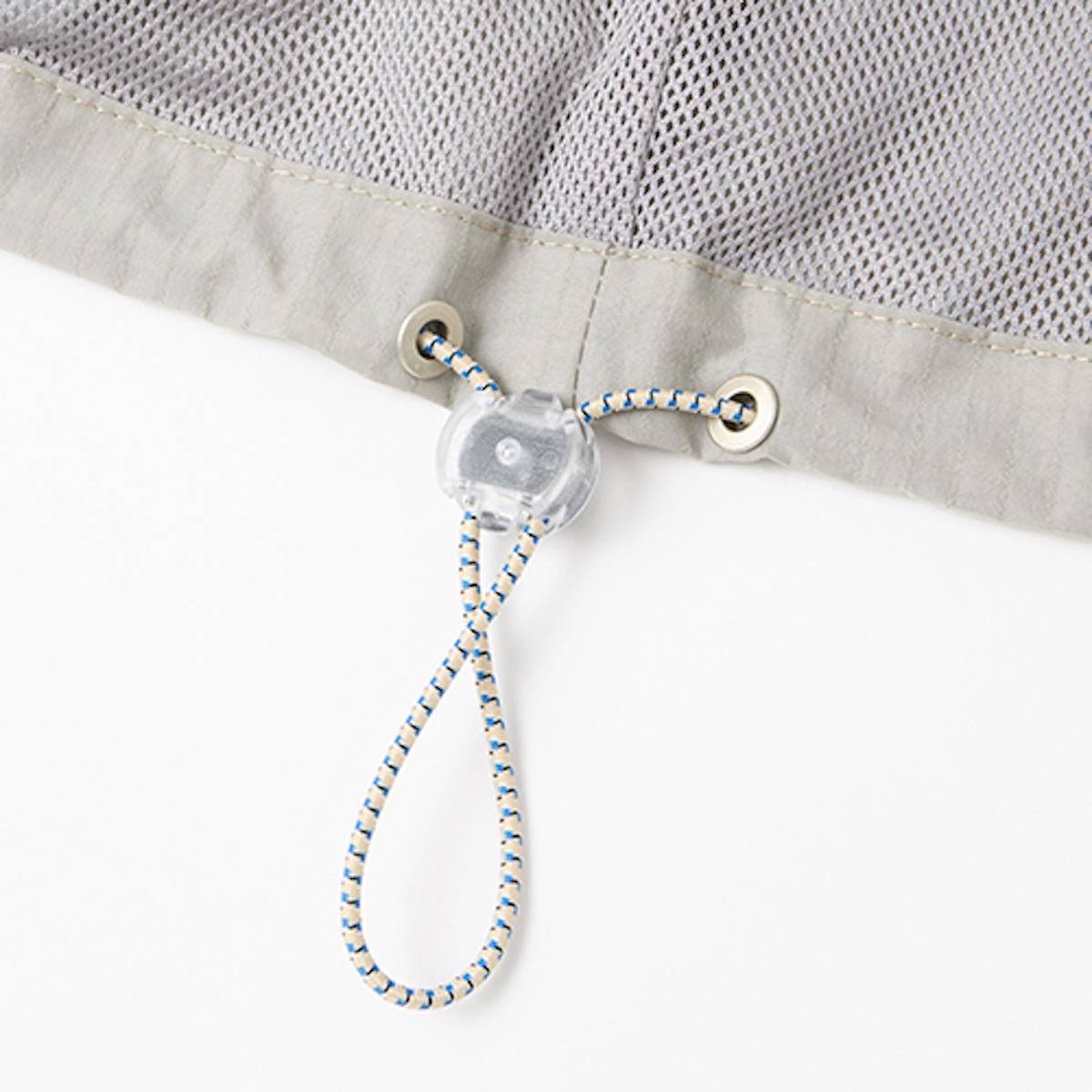
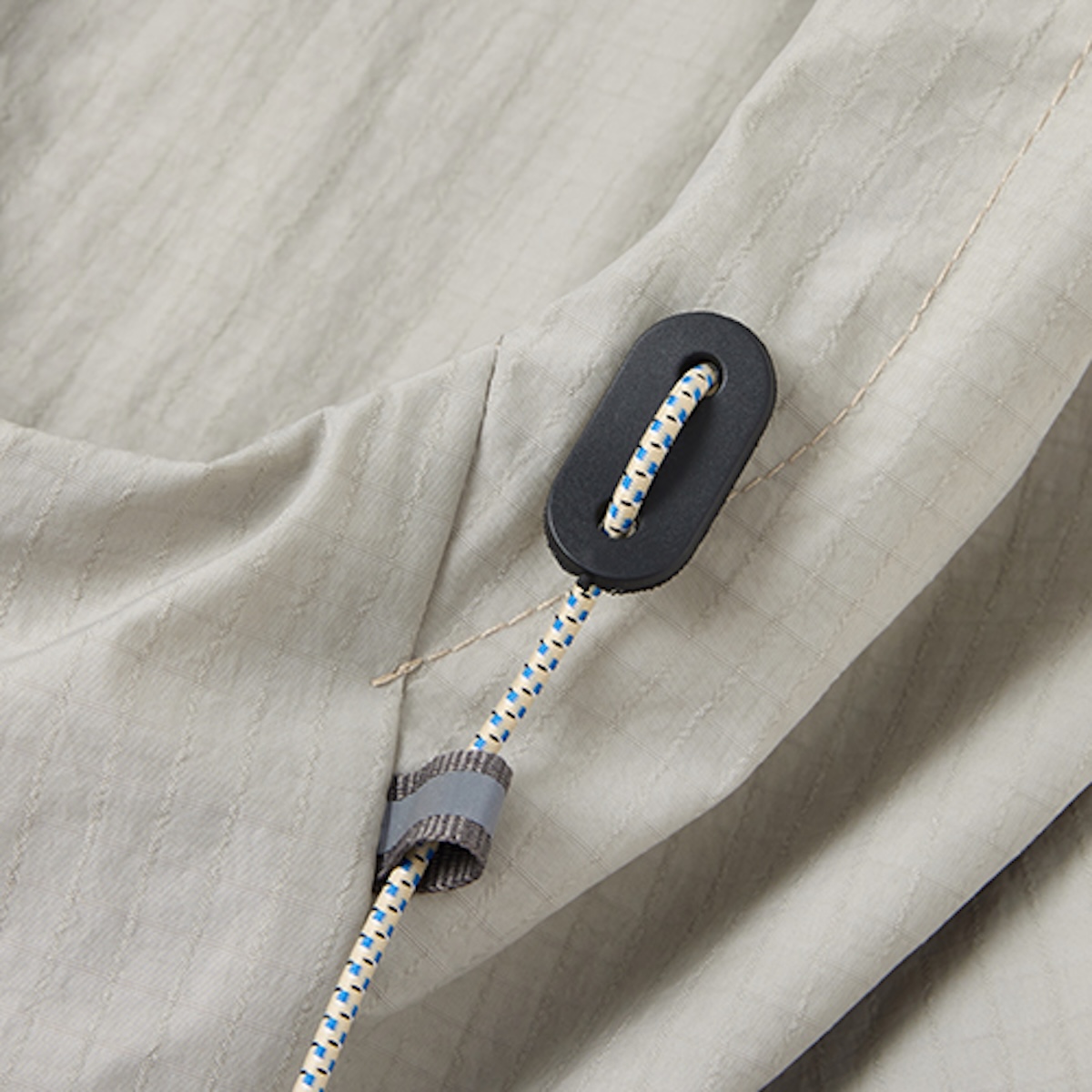
One windbreaker, eight finished images. Shot and retouched in a single pass; the front and back were photographed minutes apart under the same light, which is why the colour matches across the set.
We lead with this garment because it is the worst case for the technique. Near-white ripstop on a pure white background gives you almost no tonal separation to work with, and the piece has four different materials on it — woven shell, mesh lining, bare metal and translucent moulded plastic. The hood is the real test: lying flat and unsupported it folds into the back panel and disappears, so it has to be filled and propped open until the lining and the double brim read as two separate things.
Note what you are counting. Eight images for one garment at US$26 is the whole set, not a front view with the detail shots quoted separately. We do not price per image.
The soft one: plain cotton jersey
Plain knit is the highest-volume apparel class there is and the hardest thing to lay flat well. Unsupported it reads like a sandbag — caved shoulders, a bagging hem, no indication of how the piece will actually hang. Filled from underneath, the same tee looks like a product.
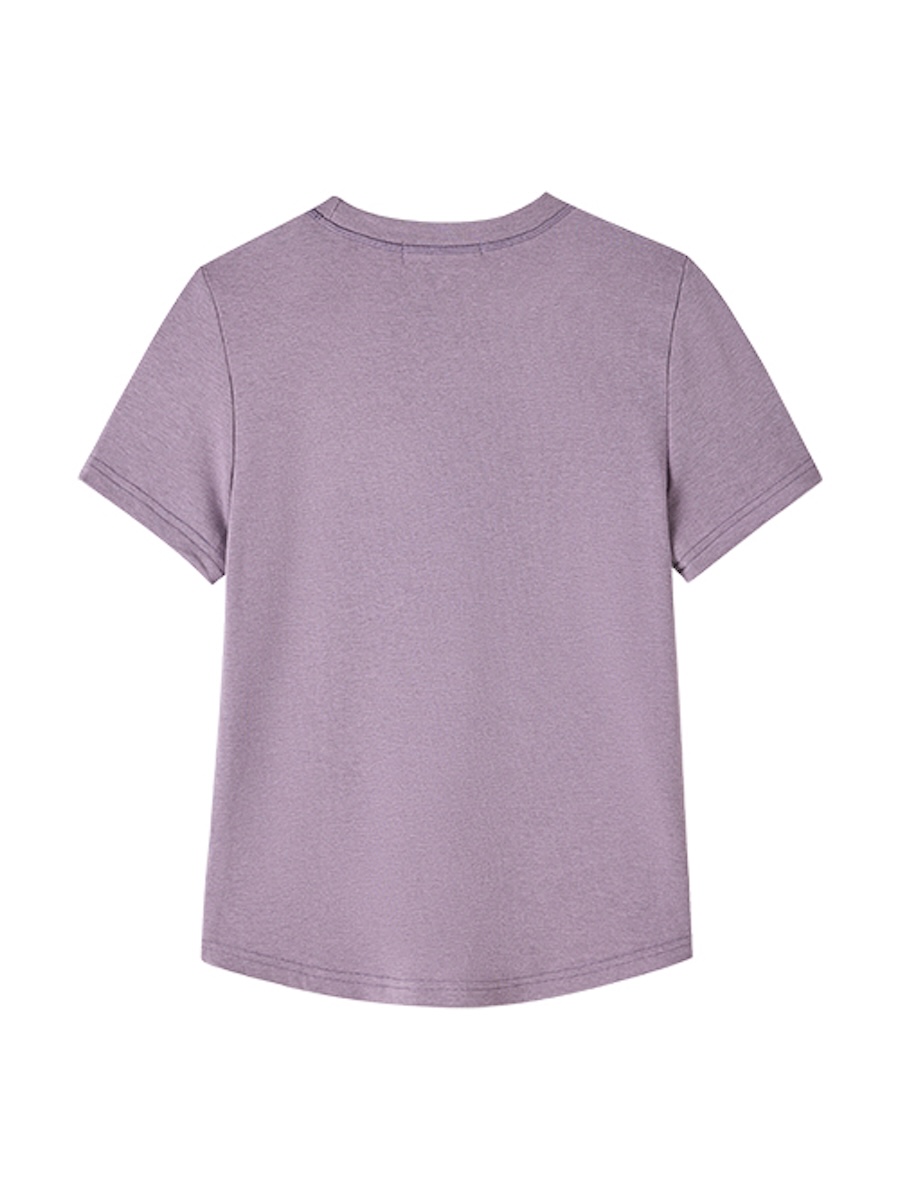
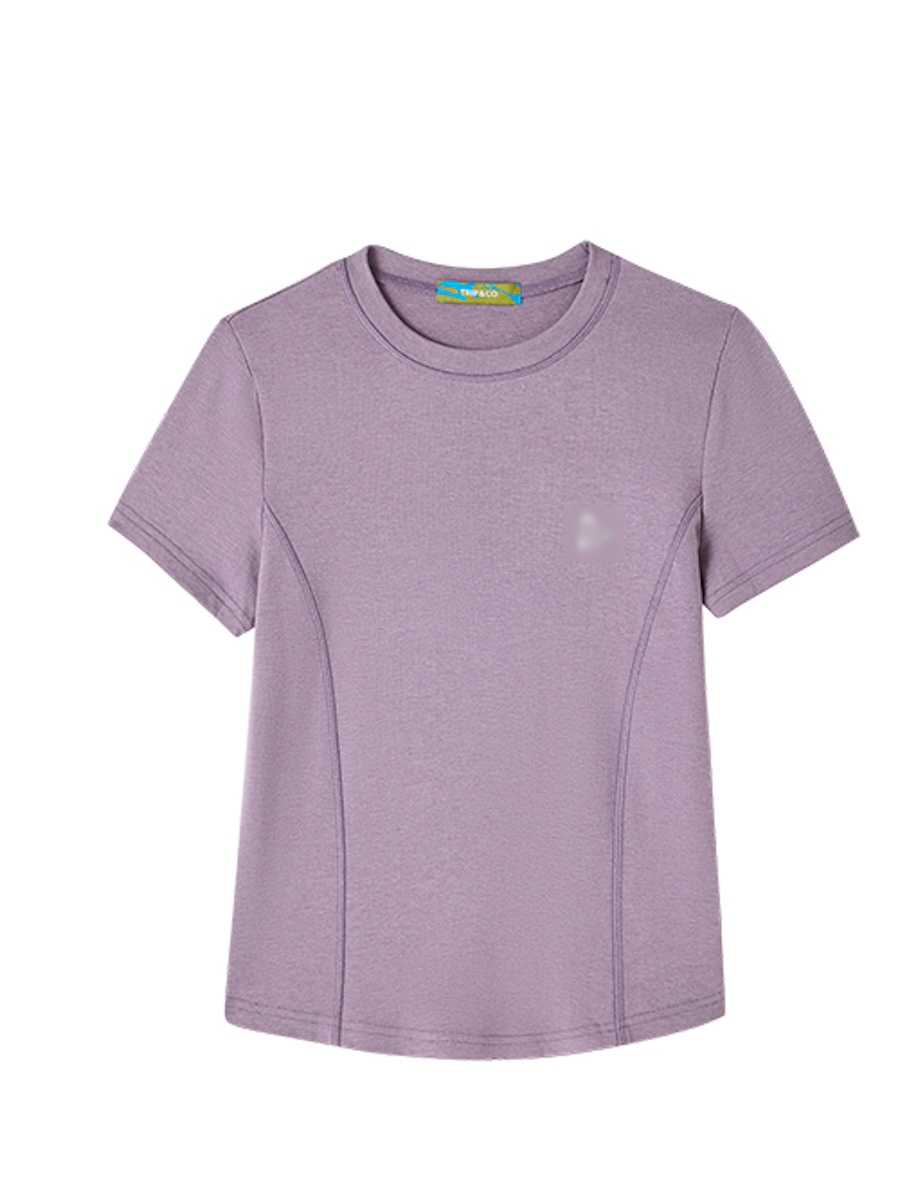
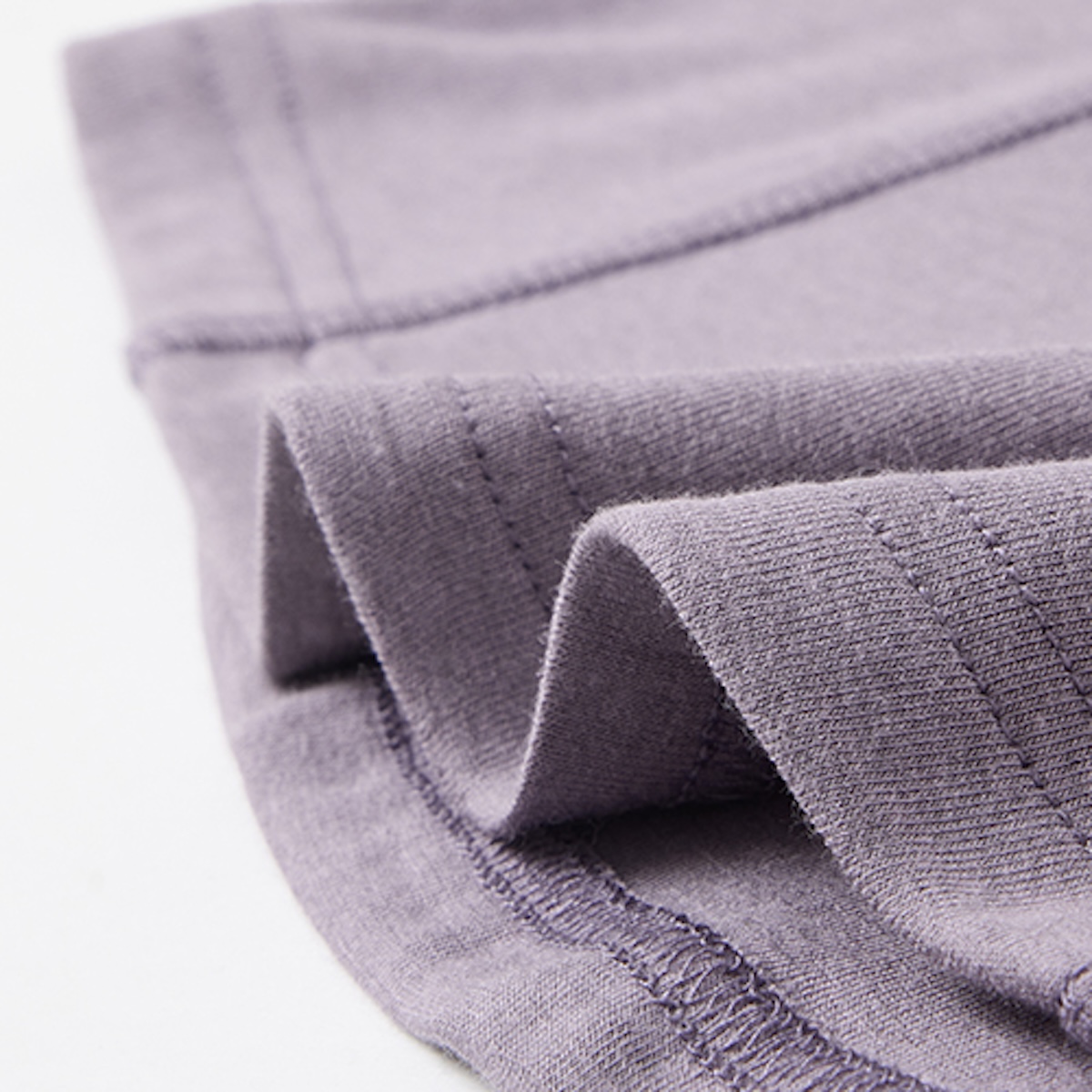
If your range is tees, hoodies, uniforms or basics, this is the comparison to judge a studio on. A stiff cotton shirt photographs itself; a soft jersey tee does not.
One order, three complete outfits
These three frames are from a single order for a schoolwear supplier: three complete outfits, each built and photographed as one image. The client’s crests have been removed: our contract lets us show a few frames once a product has publicly launched, with the branding and any identifying detail taken out, and any client can tell us in writing not to show even that. Your product gets exactly the same treatment.
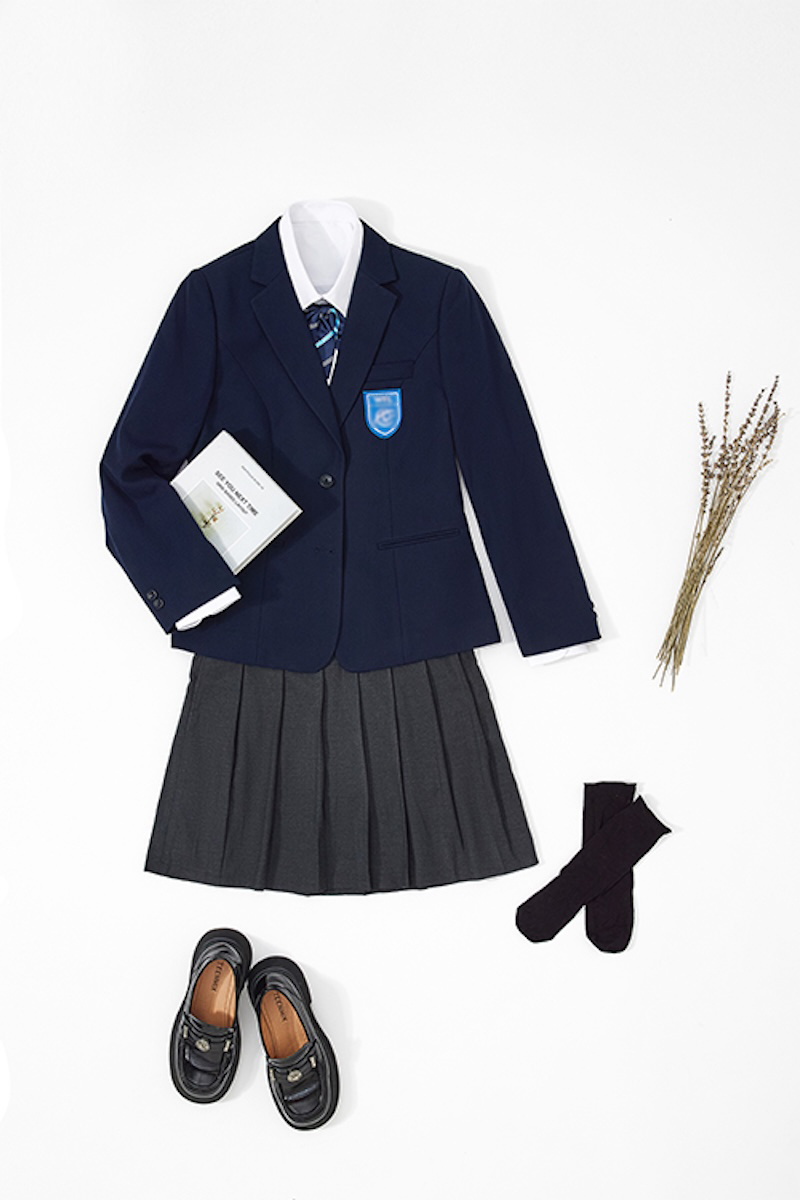
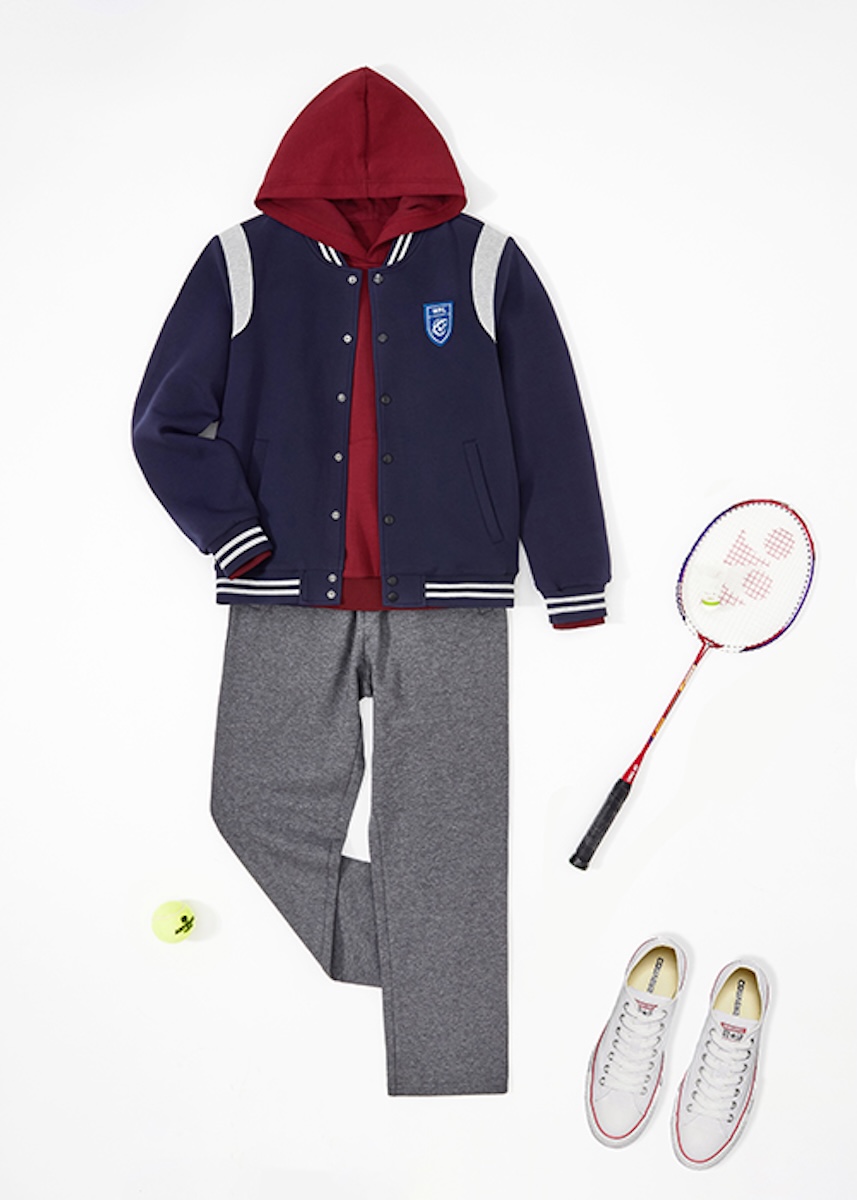
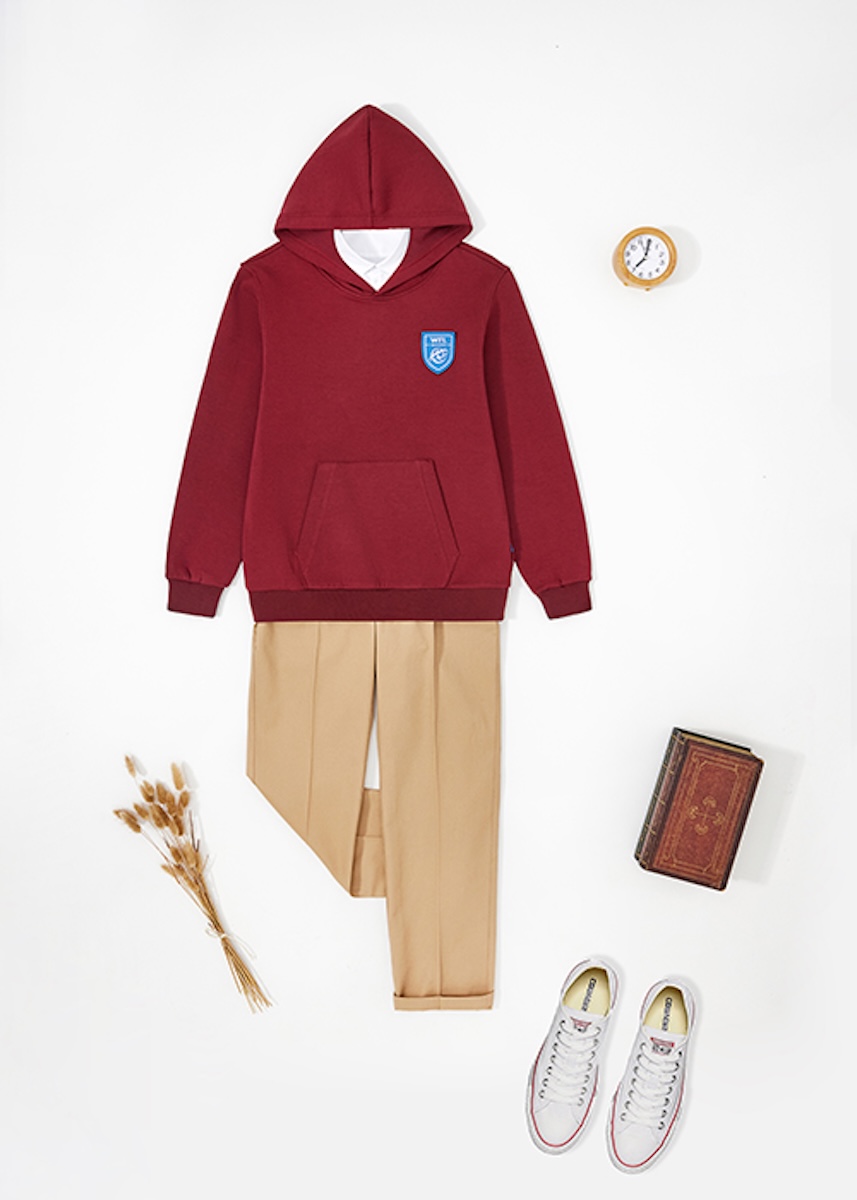
Three outfits from one order. Same ground, same light direction, same shadow weight — so they sit together on a line sheet without looking like three separate shoots.
The work in a frame like this happens before the camera does anything. Each outfit is nine or ten separate items that have to lie flat, overlap in the right order, keep their own shape and still read as one outfit from directly overhead. A blazer that has been folded in a carton does not lie flat on its own. The arrangement is the job; the photograph is the easy part.
Styled this way the set is right for a detail page, an A+ module or a wholesale line sheet. It is not valid as an Amazon main image — the ground is warm grey and there is a cast shadow, and both can get a main image rejected. For that, you want the pure-white treatment below.
Pure white, for marketplace main images
Same technique, nothing in the frame but the product, no shadow, background at RGB 255,255,255. Accessories are the clearest case for flat lay over ghost mannequin: a scarf or a beanie has no body shape to hold, so a mannequin adds nothing and a flat arrangement lets a buyer compare six pieces at once.
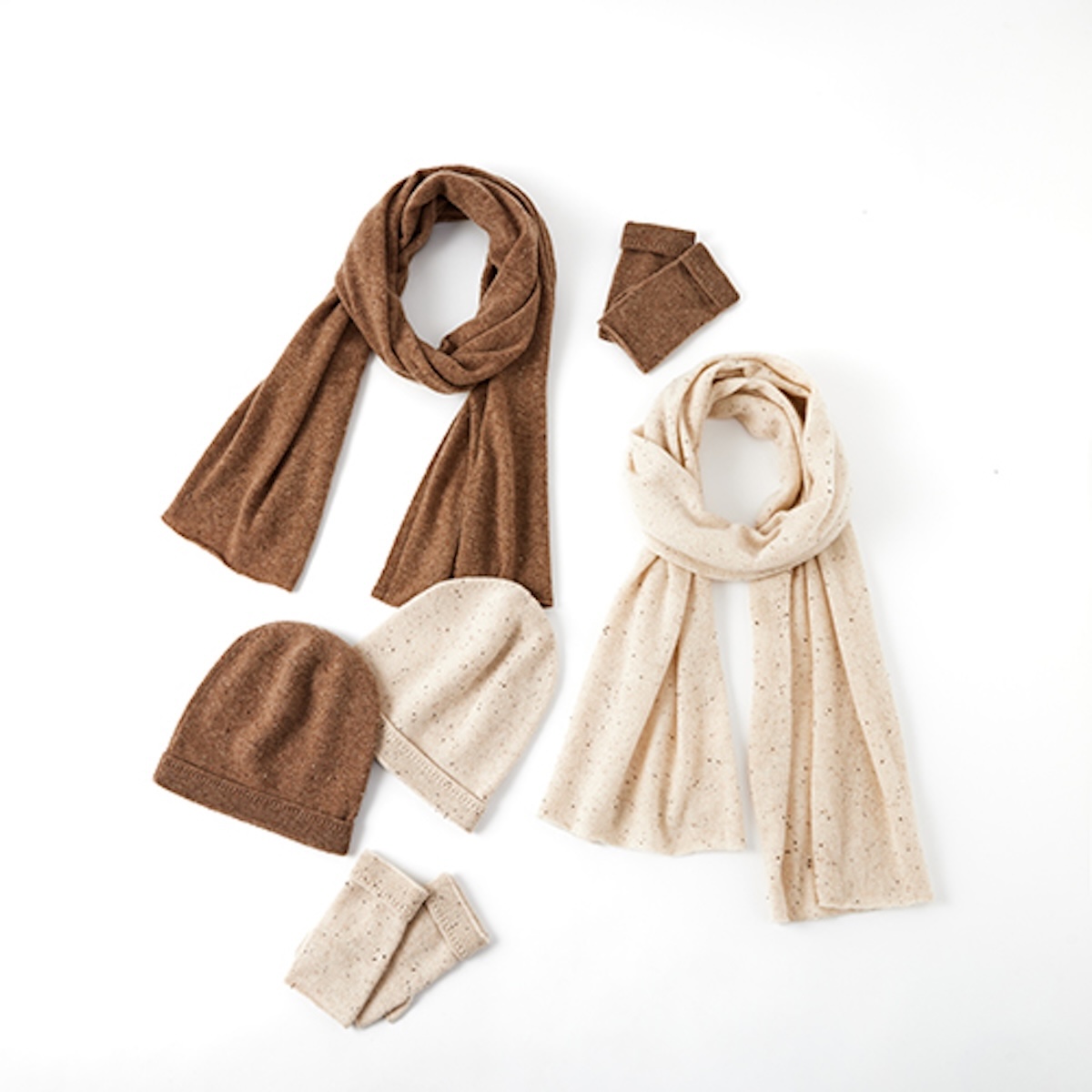
Delivered at 2,000 pixels on the longest edge, under 10 MB, as a retouched sRGB JPEG and a transparent-background PNG. Grouped shots like this are priced per garment in frame, with the group arrangement included.
Knitwear and texture, at no extra charge
Weight, hand and gauge are what a reorder decision turns on, and a front view does not show any of them. Stacked and folded frames go into the set as standard, not as an add-on.
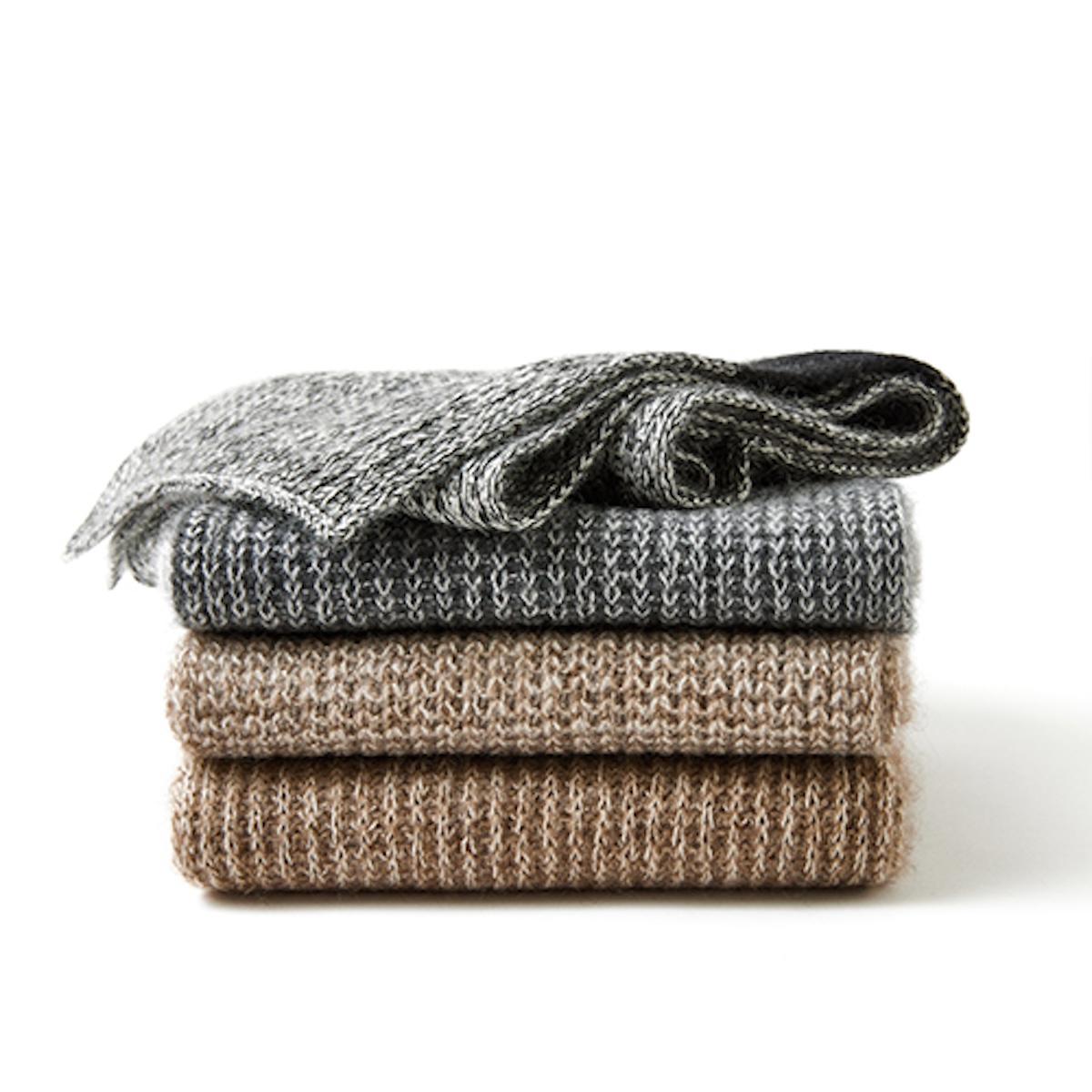
If your range is knitwear, ask for these specifically. They are the images your customer’s customer scrolls back up to look at again.
Flat lay or ghost mannequin?
Honestly, most ranges need some of each. The rule we give clients:
- Flat on white for accessories, knitwear, socks, underwear, full outfit sets, anything where the shape of a body is irrelevant — and for any range where speed and unit cost matter more than showing fit.
- Filled flat lay for structured pieces on a tight budget: jackets, shells, tees, anything with a shape worth showing where you do not need the inside of the collar. This is the middle option and most buyers do not know it exists.
- Ghost mannequin when the buyer is judging fit and construction and needs to see inside the garment: tailoring, denim, dresses, anything with a collar, a lining or a hood that has to be shown open.
- Both for a hero style. The ghost mannequin front view becomes the main image and the styled flat lay becomes the A+ module.
Flat lay runs at forty to fifty pieces a day against thirty for ghost mannequin, and costs US$26 against US$45. If you are shooting a two-hundred-piece range on a fixed budget, that difference decides how much of it gets photographed at all — so tell us the budget and the piece count and we will split the range for you.
Flat lay FAQ
What is flat lay product photography?
Flat lay photography shows a garment arranged flat and photographed from directly overhead. There is no mannequin and no model, so it is faster and cheaper than either, and it lets several pieces or a complete outfit appear in one frame. It is the standard treatment for accessories, knitwear and outfit sets, and the usual alternative to ghost mannequin photography for structured garments.
How much does flat lay photography cost, and how many images do I get?
US$26 per garment, or US$21 per garment from fifty pieces up, for 7 to 8 finished images — a front and a back hero image plus the detail shots the piece needs. A second styling of a garment we already have on the table — for example a pure-white version of a piece already shot styled — is charged at 70% of the per-garment price. Retouching is included and there is no charge per image.
Can a flat lay photograph look three-dimensional?
Yes, and this is the option most buyers do not know they have. The garment stays lying down and is photographed from overhead, but it is filled and propped from underneath so it holds a shape: the hood stands open, the sleeves keep their volume, the shoulders do not cave. It gets you most of the look of ghost mannequin photography at the flat lay price, because the shape is built physically under the garment instead of being composited in retouching afterwards. What it will not do is show the inside of a collar or a neckline, so if your buyer is judging construction you still want true ghost mannequin. The filling and propping is included in the per-garment price.
Can I use a styled flat lay as my Amazon main image?
No. Amazon requires a main image on a pure white background with no props and no visible shadow. A styled flat lay on a textured or warm ground with a cast shadow is right for a detail page, an A+ module or a line sheet, but it can get a main image suppressed. Tell us which marketplace the images are for and we will shoot the pure-white version as the main image and the styled version for everything else.
How many pieces can you shoot in a day?
Forty to fifty garments a day laid flat, against about thirty a day for ghost mannequin. Retouching runs behind the shooting line, so a hundred-piece range is normally photographed and delivered inside a week.
Do you shoot grouped outfits, or only single garments?
Both. A complete outfit built as one frame — jacket, shirt, trousers, shoes, accessories — is priced per garment in frame, and the arrangement work is included. Grouped frames are the strongest thing flat lay does that no other technique can, because they show the buyer how the range sells together.
Send one garment. The first one is free.
One physical piece, any category. We shoot and retouch it — pure white and styled, so you can see both — and send you the finished files with nothing held back and no obligation to order.